Packing Hacks Every Traveler Should Know
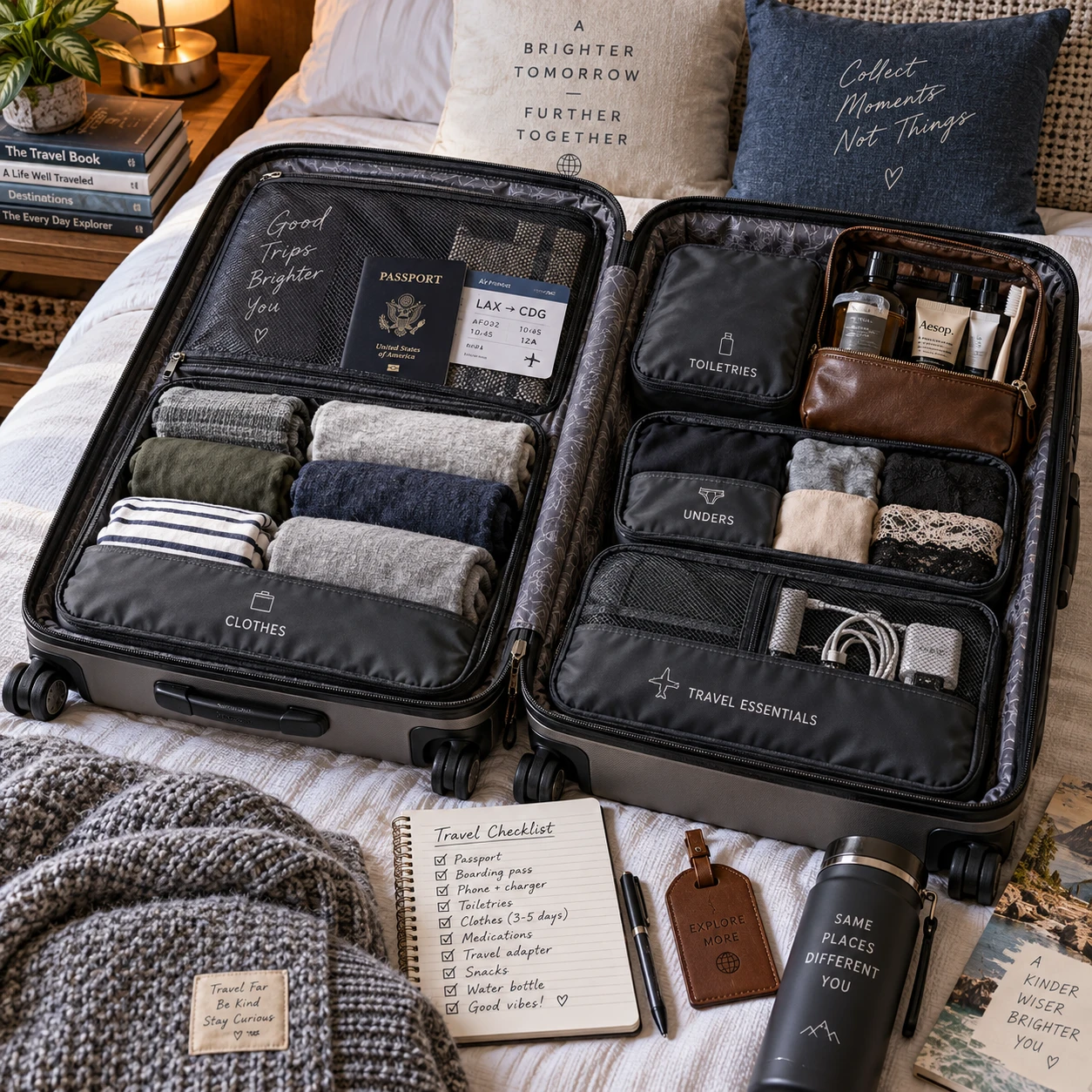
Packing for a trip gets easier when every item has a purpose and a place. A few simple habits can help you avoid overpacking, find essentials quickly, and make better use of a carry-on or checked suitcase without buying expensive gear.
Start with your itinerary, then build a compact wardrobe and organize the items you’ll need along the way. These practical packing hacks work for weekend breaks and longer trips alike, with room to adjust for the weather, activities, and luggage you have.
Start with a simple packing list
A packing list helps you match what you bring to your itinerary, expected weather, and trip length. Write down activities first, then add only the clothing and essentials those plans require.
Before packing, check the forecast for the dates and places you’ll visit. A city trip with dinners out calls for different clothes than a hiking weekend, even if both last three days. Note any special needs, such as workout gear, medication, a swimsuit, or a jacket for cool evenings.
Use a short list grouped by category so you can scan it quickly:
- Clothing: tops, bottoms, layers, sleepwear, and underwear.
- Footwear: shoes suited to planned activities, plus any necessary spare pair.
- Essentials: medication, chargers, travel documents, and toiletries.
- Extras: items tied to specific plans, such as a rain shell or formal outfit.
Pack the list once, then review it after you’ve laid everything out. If you can’t connect an item to an activity or a real need, leave it at home. The exception is a small contingency item that solves a likely problem, such as a compact umbrella when rain is in the forecast.
Choose versatile clothes and pack fewer of them
Versatile clothes reduce bulk because each piece can work in more than one outfit. Build a small capsule wardrobe around a few colors, comfortable basics, and layers suited to the forecast.
Choose two or three coordinating colors so tops and bottoms mix easily. For example, dark trousers, neutral tops, and one brighter layer can create several combinations without packing a separate outfit for each day. A lightweight overshirt or cardigan can also serve as an extra layer on a chilly flight.
Plan outfits around your activities, but allow pieces to repeat. If you’ll be away for a week, you usually don’t need seven completely different outfits. Underwear and socks can be packed for each day, while many outer layers can be worn more than once if they stay clean and comfortable.
- Wear your bulkiest shoes and outer layer during travel.
- Choose fabrics that are comfortable to rewear and less prone to creasing.
- Limit special-occasion clothing to what your itinerary actually requires.
The trade-off is that a smaller wardrobe offers less variety. If personal style or a specific event matters, make room for those items by trimming less useful extras rather than forcing a one-size-fits-all packing rule.
Use smart folding and rolling techniques
Rolling clothes can make soft garments easier to arrange, while folding helps protect structured pieces. Choose the method based on the clothing, then fill awkward gaps without crushing delicate items.
For T-shirts, casual trousers, and sleepwear, smooth each item flat and roll it firmly without making a tight bundle. Place rolls side by side so you can see what’s packed. This can make access simpler, though rolling does not guarantee extra space and may still wrinkle some fabrics.
Fold shirts, jackets, and garments with collars or sharper creases. Lay them flat near the top of your suitcase or use a gentle fold along natural seams. For a mixed load, roll everyday basics and fold the pieces you want to keep neater.
Use small, soft items to fill gaps around the edges of your luggage, but keep shoes and toiletries separate from clean clothing. Avoid pressing down on the suitcase until it is difficult to close; overfilling can strain zippers and make unpacking harder. A little structure usually beats squeezing in one last item.
Make packing cubes and small bags work for you
Packing cubes group belongings by category, making a suitcase easier to navigate. Use a few cubes for a clear system rather than packing every item into its own pouch.
For instance, one cube can hold tops, another can hold bottoms, and a small bag can keep underwear together. You could also organize by trip stage, such as keeping the first night’s clothes near the top. The best system is the one that lets you find what you need without unpacking everything.
Packing cubes add some structure, but they also take up space and can encourage you to bring more than you need. If you’re traveling light, ordinary reusable bags or a simple laundry bag may be enough. Keep dirty clothes separate from clean ones, especially on longer trips, and avoid sealing damp clothing in an airtight bag for extended periods.
Small bags can also corral accessories, charging cables, or spare buttons. Label them mentally by consistent use, or choose transparent bags so you can see the contents. The goal is fewer loose items, not a collection of containers that becomes another thing to manage.
Pack toiletries and essentials without the mess
A secure toiletry bag, travel-sized containers, and a little separation between liquids and clothing help prevent spills. Pack only the personal-care products you’ll use, and check airline rules before flying with liquids in your carry-on.
Transfer a small amount of shampoo, cleanser, or lotion into travel-sized containers if you don’t need full-size bottles. Make sure each container closes firmly, then place liquids in a sealed bag inside the toiletry bag. For an extra safeguard, put a small piece of plastic wrap beneath a bottle cap before tightening it, if the container’s design allows it.
Keep toiletries away from electronics and clothing that would be difficult to replace. For checked luggage, placing the toiletry bag near the top makes it easier to remove at your destination. For a carry-on, follow the current liquid and screening requirements of your departure airport; rules can vary by location.
Medication and daily essentials should stay easy to reach. Keep prescriptions in their original packaging where practical, and pack important medication in your personal item rather than a checked suitcase. That way, a delayed bag is less likely to disrupt your routine.
Use carry-on space strategically
Use your carry-on luggage for items you may need during the journey and essentials you cannot risk losing. Put documents, medication, a charger, and a change of clothes where they are accessible, not buried beneath everything else.
Your personal item is useful for in-flight necessities and valuables. Depending on your airline’s size rules, it might be a backpack, tote, or small bag that fits beneath the seat. Keep your passport or identification, wallet, phone, headphones, medication, and any needed travel documents in a secure pocket.
- Place a light layer and a change of underwear near the top of your carry-on.
- Keep electronics and charging cables together so they’re easy to retrieve.
- Pack heavier items low and close to the wheels of a rolling suitcase.
- Check your airline’s carry-on and personal-item dimensions before departure.
For a checked bag, reserve carry-on space for essentials and anything fragile or valuable. For a carry-on-only trip, leave a little room for items you may acquire along the way. A tightly packed bag is harder to close after airport screening or a change of plans.
Do a final check before you leave
A final check catches forgotten essentials and removes items that slipped into your bag without a clear purpose. Review your packing list, confirm the forecast, and make sure your luggage meets your travel plans.
Set your packed bags near the door and check the items that are easy to overlook: identification, tickets or booking details, wallet, keys, medication, and phone charger. Confirm that weather-specific gear matches the latest forecast, especially if temperatures or rain are likely to change during the trip.
Then do one last overpacking check. Remove duplicate items, unused backup outfits, and products you can reasonably buy at your destination. Keep anything essential for health, accessibility, or a planned activity. A useful rule is to ask, When will I use this, and what happens if I leave it behind? If you have no clear answer, it may not need to travel with you.
Frequently asked questions
What is the best way to save space when packing?
Plan outfits that share a small set of coordinating pieces, then use rolling or folding methods that suit the clothing. Wear bulky shoes and layers in transit, and leave nonessential items at home. The right approach depends on your garments and luggage, so test your layout before departure.
Are packing cubes worth using?
Packing cubes can make clothes easier to sort and find, especially when you move between accommodations or share a suitcase. They add structure, but also use some space. A few cubes are often more practical than assigning one to every category.
How do you pack toiletries to prevent leaks?
Use a toiletry bag, close containers securely, and place liquids in a sealed bag separate from clothing and electronics. Travel-sized containers reduce the amount of liquid you carry, but check that their lids are compatible with the contents and won’t loosen in transit.
What should you keep in your personal item?
Keep identification, wallet, phone, medication, travel documents, valuables, and any items you’ll need during the journey in your personal item. Add a charger, headphones, and a light layer if space allows. Check your airline’s personal-item size rules before packing.